Beyond the Wheelspin: Piastri's Disappointing Home Race Exit
The Australian Grand Prix, a highly anticipated spectacle for motorsport enthusiasts and a particularly special event for local heroes, took an unexpected and heartbreaking turn for Oscar Piastri. Just moments before the lights were due to go out, setting the stage for his home race, the McLaren prodigy’s dream evaporated in a dramatic pre-race Oscar Piastri Explains Shock Australian GP Pre-Race Crash. What should have been a triumphant start in front of his adoring home crowd quickly became a scene of profound disappointment, as his MCL38 met the concrete wall at Albert Park, ruling him out before a single racing lap had been completed.
Piastri, who had impressed by qualifying a strong fifth, was merely completing his reconnaissance laps to the grid when the incident unfolded. The sight of his McLaren machine, designed for precision and speed, helplessly sliding into the barrier, left fans and indeed Piastri himself in disbelief. This wasn't merely a mechanical failure; it was a complex confluence of factors, a 'combination of bad factors' as Piastri himself would later describe it, that led to a shocking premature exit. Understanding the root causes of such an incident offers critical insights into the razor-thin margins and immense complexities of modern Formula 1 racing, even before the competitive action truly begins.
The Shocking Sequence: How the Piastri Accident Unfolded
The fateful moment occurred at the exit of Turn 4 at the challenging Albert Park circuit. As Piastri navigated his McLaren MCL38 during the routine reconnaissance laps – laps crucial for drivers to get a final feel for the track conditions and tyre temperatures – he lost control. The initial reports highlighted his proximity to the kerb, a common element on any race course that drivers often exploit for faster lap times. However, on this particular occasion, the kerb played a role in an unfortunate chain reaction. Piastri's car veered suddenly, sending him backwards and subsequently into the concrete wall on the driver's left, causing significant and terminal damage to the front-end, particularly the right-front wheel and suspension. The immediate consequence was clear: his race was over.
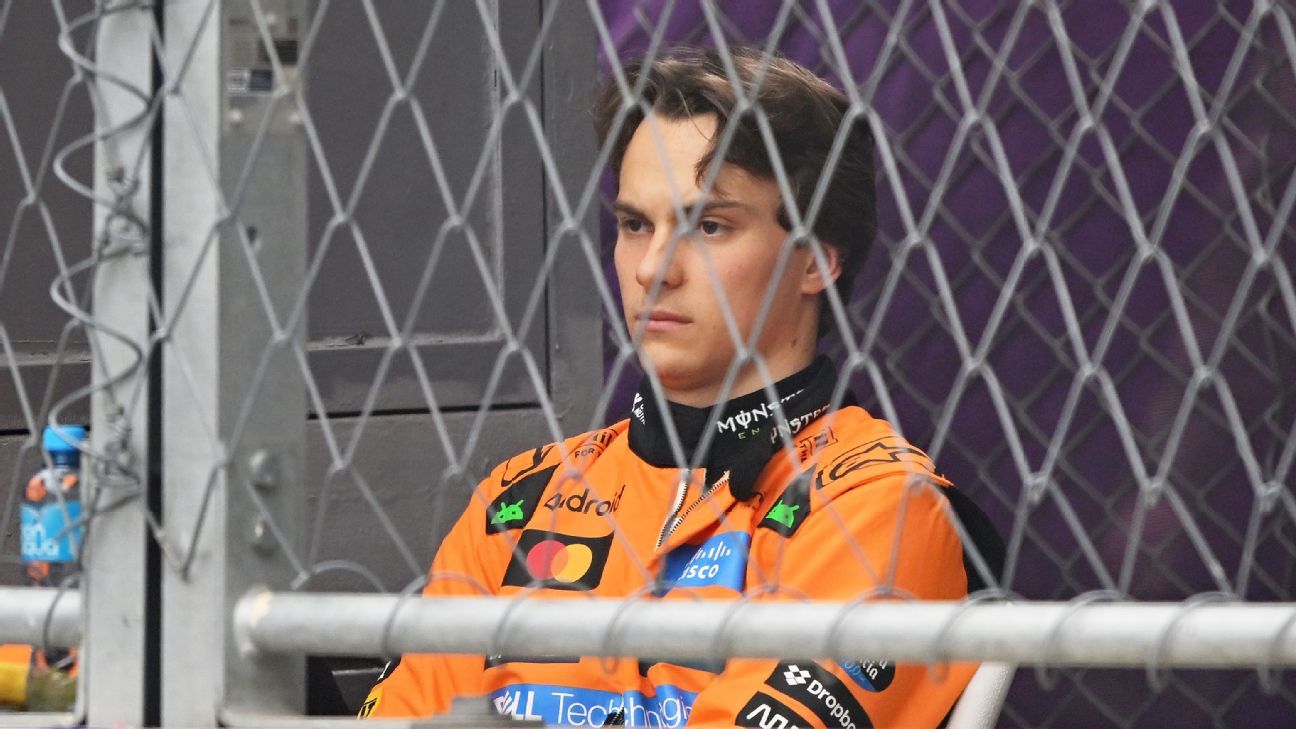
The visual of Piastri, helmet still on, walking away from his stricken car and back to the paddock, conveyed a deep sense of dejection. For any driver, crashing out is tough, but to do so before the race even starts, especially at your home Grand Prix, magnifies the sting exponentially. "It's obviously even more disappointing," he articulated, his words echoing the sentiment of every Australian fan who had come to cheer him on. This Piastri's Australian GP Crash: Unexpected Power Spike & Kerb incident wasn't just a physical wreck; it was an emotional blow that left the young driver 'shocked and surprised' by how swiftly and uncontrollably it all happened.
Unpacking the 'Bad Factors': Power Spike, Kerb, and Cold Tyres
Delving deeper into Piastri's explanation reveals the intricate interplay of variables that contributed to this unfortunate piastri accident course. It wasn't a singular misstep but a perfect storm:
- Unexpected Power Spike: The most significant revelation was an unforeseen surge of power. Piastri reported receiving approximately "100 kW more power than I've had the whole weekend" at the precise moment he shifted gears. This translates to roughly an extra 134 horsepower, an enormous and completely unlooked-for boost, especially when managing a highly strung F1 machine at the limit. Modern F1 power units are incredibly complex, integrating internal combustion engines with sophisticated hybrid systems (MGU-K, MGU-H). While these systems are designed for efficiency and performance, unexpected energy deployment can lead to unpredictable torque delivery.
- Contact with the Kerb: As Piastri explained, he "got on the kerb a little bit." Drivers routinely use kerbs to widen the track and carry more speed through corners. However, hitting a kerb, particularly at the exit of a corner under acceleration, can unsettle the car, reduce the contact patch of the tyres, and initiate a loss of grip. When combined with an unexpected power surge, this becomes a critical vulnerability.
- Cold Tyres: Although not explicitly detailed as much in the initial reports, reconnaissance laps are precisely for bringing tyres up to optimal temperature. While Piastri had completed several laps, tyres, especially cold ones, offer less grip than those at operating temperature. An unexpected power delivery onto a surface already compromised by a kerb and potentially not-yet-optimal tyre temperatures creates a recipe for disaster.
- Wheelspin: The culmination of these factors was immediate and aggressive wheelspin. With 100 kW of unanticipated power suddenly routed to the rear wheels, combined with the reduced grip from the kerb and potentially cold tyres, the tyres simply overloaded, broke traction, and sent the car into an uncontrollable slide.
Piastri was quick to shoulder some of the blame, acknowledging his choice to use that particular exit kerb. However, the unexpected power spike clearly played a pivotal role, highlighting the fine line between pushing the limits and encountering an unforeseen technical anomaly. This incident also drew parallels to Mercedes driver Kimi Antonelli's FP3 crash, where he lost control after accelerating over kerbs and hitting a bump, raising questions about the aggressive torque delivery of modern F1 cars and the challenge of managing such immense power outputs.
Lessons and Evolving Challenges in Modern F1
The unfortunate piastri accident course serves as a stark reminder of several critical aspects of Formula 1:
- The Complexity of Hybrid Power Units: Modern F1 engines are marvels of engineering, integrating various energy recovery systems. However, this complexity means that even minor calibration issues or unexpected power spikes can have catastrophic consequences. Teams and manufacturers continually strive to refine these systems, but incidents like Piastri's underscore the challenge of ensuring seamless, predictable power delivery at all times.
- The Absolute Limits of Performance: F1 drivers operate at the very edge of what's physically possible. Every millisecond, every millimetre counts. This means that even a slight deviation from expected car behaviour – be it from a kerb, cold tyres, or an unexpected power surge – can instantly overwhelm the car's grip limits, turning a fast exit into a crash.
- The Importance of Data and Review: Post-incident analysis is paramount. Teams like McLaren pour over countless gigabytes of telemetry data to understand precisely what happened. This review process is not about assigning blame but about learning, calibrating systems, and implementing safeguards to prevent recurrence. It's a continuous cycle of innovation, testing, and refinement that defines top-tier motorsport.
- Driver Adaptation vs. System Reliability: While drivers are incredible athletes with phenomenal reflexes, some scenarios happen too quickly to react. Piastri's admission of being "backwards before I'd even really had a chance to react" speaks volumes about the speed at which these events unfold. It reinforces the need for car systems to be robust and predictable, complementing rather than contradicting driver input.
The Emotional Toll and McLaren's Path Forward
For Oscar Piastri, a promising talent competing in his home race, the emotional burden of this exit was palpable. It meant watching his teammate, Lando Norris, be the sole McLaren representative on the grid, ultimately finishing a respectable fifth. While Norris's performance offered some solace to the team, the absence of their local star was keenly felt.
The incident, while disappointing, also provides invaluable data for McLaren and Mercedes (their engine supplier). Every unexpected event is a learning opportunity. The rigorous review process will undoubtedly lead to adjustments in software, calibration, and perhaps even operational protocols for reconnaissance laps. Piastri, known for his maturity and analytical approach, will surely process this experience and emerge stronger, armed with a deeper understanding of the nuances of his machine and the demands of the sport. His ability to articulate the technical factors so clearly post-incident speaks to his professionalism and dedication.
Conclusion
Oscar Piastri's pre-race exit at the Australian Grand Prix was a cruel twist of fate, a potent mix of unforeseen technical glitches and critical track conditions converging at the worst possible moment. It highlights the immense complexity of modern Formula 1, where the pursuit of performance pushes the boundaries of engineering and human capability to their absolute limits. While the disappointment of a home race retirement is undoubtedly profound, this piastri accident course will serve as a valuable, albeit painful, lesson for both the driver and his team. The resilience of Piastri and the relentless pursuit of perfection by McLaren will ensure that they meticulously analyse every detail, aiming to turn this setback into a catalyst for future success on the global stage.